

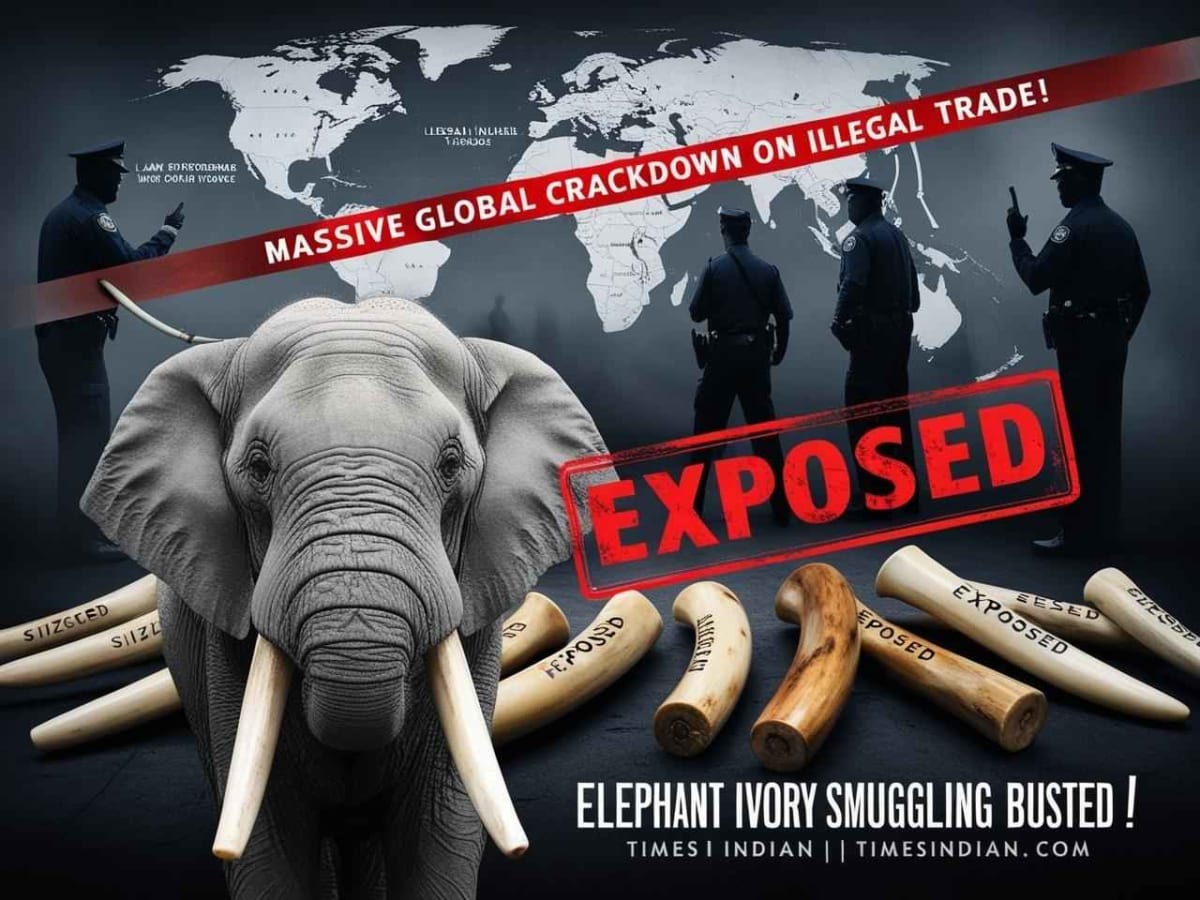
NHK has revealed the scale of illegal ivory transactions despite international regulations under CITES (Convention on International Trade in Endangered Species of Wild Fauna and Flora).
Under CITES, the trade of Asian ivory has been banned since 1975, and African ivory since 1990. However, the trade continues worldwide.
Global Ivory Trade Data (2014–2024)
NHK analyzed CITES data over the past 10 years, revealing the top countries involved in illegal ivory seizures:
- Vietnam – 73.7 tonnes (from 185 countries & territories).
- Nigeria – 42.6 tonnes.
- China – 39.7 tonnes.
- Japan – 1.7 tonnes (1.4 tonnes seized overseas, 240 kg within Japan).
Current Status of Ivory Trade
✔ Declining illegal trade, but some countries (including Japan) still allow trading under certain conditions.
✔ Japan has a large stockpile of ivory previously imported.
Expert Insights
Nishino Ryoko, an official of an NGO monitoring wildlife trade, emphasizes the importance of transparency in illegal ivory trade data. She calls for discussions on regulating Japan’s domestic ivory market.






Discussion (0)
Leave A Reply
Speak Truth To PowerModerated by Times Indian