

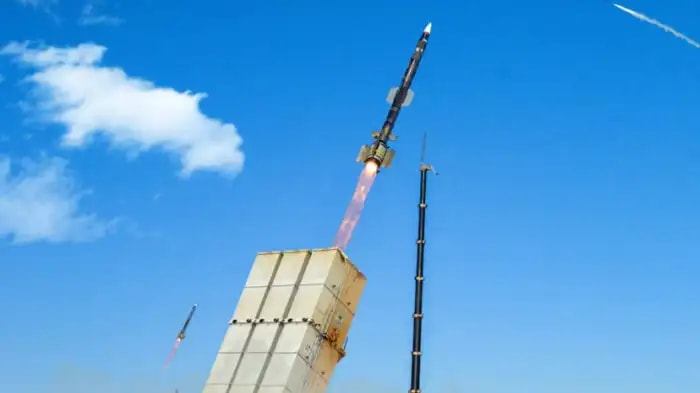
Islamabad: After the beating in the recent military confrontation with India, Pakistan has lost faith in the Chinese air defense system. Pakistan had bet on Chinese air defense HQ-16 and HQ-9, but during Operation Sindoor this system failed miserably in detecting and stopping Indian attacks. India's electronic warfare strategy rendered the Chinese system useless. After the failure of the Chinese system, Pakistan is now looking at other defense systems as an alternative. Reports suggest that Pakistan is now exploring the possibility of acquiring Turkey's long-range air defense systems SIPER 1 and SIPER 2.
Pakistan in fear of India's attack
Pakistan's search for a new air defense system shows how scared it is after India's attacks. After launching Operation Sindoor on May 7, India carried out precision attacks on terrorist sites as well as major Pakistani airbases including Chaklala and Rahim Yar Khan. Indian Air Force's Rafale jets equipped with French-origin Scalp cruise missiles bypassed Pakistan's HQ-16 and HQ-9 systems. Indian electronic warfare capability completely blinded Pakistan's air defense network and it failed to intercept a single missile. HQ-9 launchers in Lahore and Sialkot were also destroyed.
Special features of SIPER system
After the failure of the Chinese system, Pakistan has focused its attention on Turkey's SIPER missile defense system. SIPER Block 1 guided missile can hit air targets at a distance of 70 km. It has capabilities equal to the HQ-16, but is designed with improved radar and guidance systems to resist electronic counter measures. The system is already operational.
SIPER Block 2 is currently in testing and is expected to be operational with the Turkish Air Force by 2026. The Block 2 version extends its engagement range to 150 km, establishing it as a direct competitor to the HQ-9. It includes modern features to counter stealth and jamming threats. The Turkish Air Force is evaluating the system's resilience against radar jamming and electronic warfare.
Pakistan embarrassed by Chinese air defence
Pakistan's interest in Turkey's SIPER system shows that it wants to move away from China. The poor performance of the Chinese HQ-16 and HQ-9 has not only embarrassed Pakistan but also strained its defence ties with Beijing. People in China have blamed Pakistan for the failure of the system and attributed it to poor operations. This has prompted Pakistan to look for options that can better counter the threats posed by India.
Incorporating Turkey's SIPER is not easy
Turkey's SIPER system can overcome many of Pakistan's current weaknesses. Its advanced radar technology can reduce India's planned jamming strategy. Apart from this, the 150 km long range of Block 2 will also give Pakistan a long-range defense option. But it will not be easy for Pakistan to integrate SIPER systems. Pakistan's current integrated air defense structure is heavily dependent on Chinese systems. In such a situation, Turkey's system may face difficulties.
In addition, Pakistan is already facing an economic crisis. Pakistan's economic constraints can make defense acquisition difficult. The price of SIPER systems has not yet been publicly disclosed, but it is likely to be significant.






Discussion (0)
Leave A Reply
Speak Truth To PowerModerated by Times Indian