

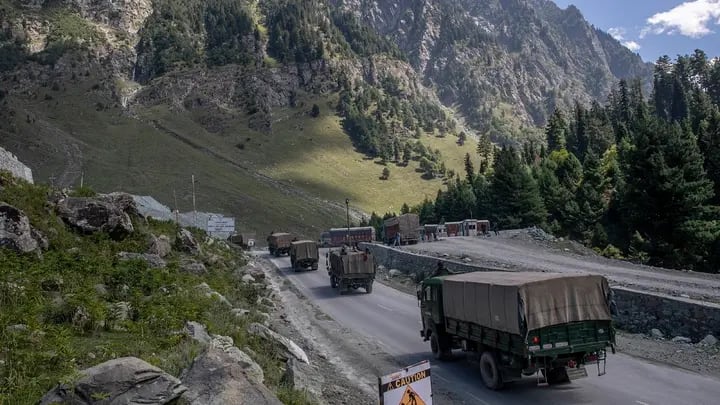
New Delhi: In view of a potential future conflict with China, India is developing large-scale infrastructure in the Himalayan regions. According to a report in the US media outlet Wall Street Journal, hundreds of millions of dollars are being spent on the construction of roads, tunnels, and airstrips to strengthen troop deployment and supply lines in the disputed border areas.
The 2,200-mile-long border between India and China, known as the Line of Actual Control (LAC), has long been a source of tension. The violent clash in the Galwan Valley of eastern Ladakh in 2020 exposed the realities of both countries' military preparedness.
India's Difficulties
According to analysts, at that time, China was able to deploy additional forces within hours due to its superior road and rail network, while it could take India up to a week due to the difficult terrain and limited roads.
Change in India's Thinking After 2020
Former senior army officers say that there has been a significant shift in India's thinking after the 2020 incident. It became clear that connectivity in the border areas needed to be strengthened completely. Several projects have been launched under this strategy, aimed at connecting high-altitude areas with military outposts and local settlements.
Increased Activity at Pangong Lake
Activity is also intensifying in the Pangong Tso lake region. This lake stretches across India's Ladakh and China's Tibet Autonomous Region and has long been a disputed area. Since 2020, both countries have rapidly expanded roads and infrastructure here. China has also recently completed a bridge connecting the northern and southern shores of the lake, which has made military movement easier for them.







Discussion (0)
Leave A Reply
Speak Truth To PowerModerated by Times Indian