

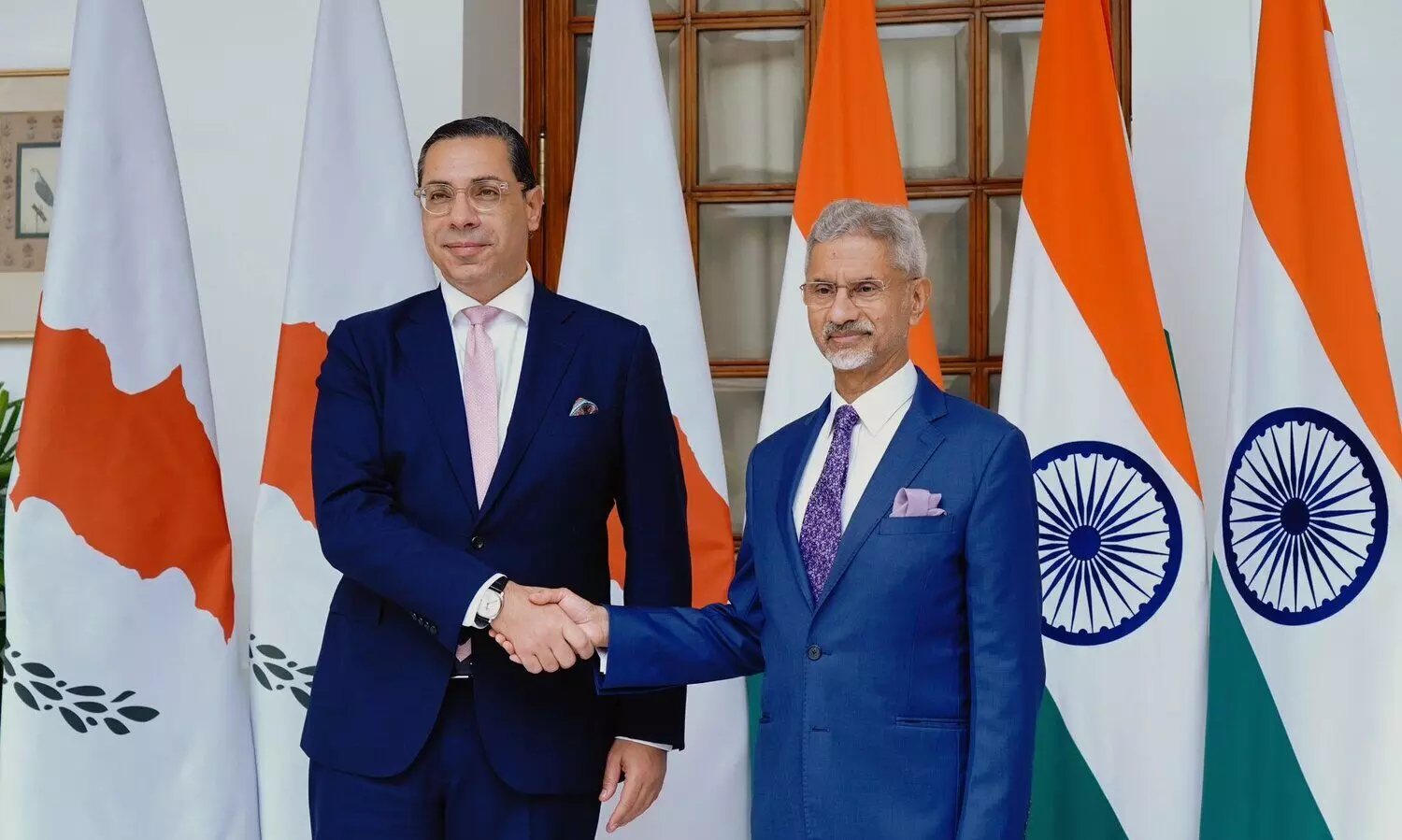
New Delhi: Global attention remains fixed on the escalating tensions between Iran on one side, and the US and Israel on the other. The repercussions of this conflict are also becoming apparent in India. Against this backdrop, External Affairs Minister S. Jaishankar first held discussions with the Foreign Ministers of Saudi Arabia and the United Arab Emirates (UAE). He deliberated with them on various facets of the evolving situation in West Asia. Meanwhile, on Sunday, Jaishankar also met with the Foreign Minister of Cyprus, Constantinos Kombos, in Brussels. He expressed his immense pleasure regarding this interaction.
Jaishankar Reveals What Was Discussed
In a post on 'X' (formerly Twitter), External Affairs Minister Jaishankar shared details of his conversation with Cypriot Foreign Minister Constantinos Kombos. He noted, "During this interaction, we discussed ways to further strengthen our strategic partnership." Additionally, the two leaders exchanged views on the prevailing situation in West Asia. Jaishankar added, "As Cyprus holds the Presidency of the Council of the European Union, I appreciate its support in advancing relations between the EU and India."
Key Update on the West Asia Crisis
Separately, amidst the ongoing conflict involving Iran, External Affairs Minister S. Jaishankar held telephonic conversations on Saturday night with UAE Foreign Minister Sheikh Abdullah bin Zayed Al Nahyan and Saudi Foreign Minister Faisal bin Farhan. In a social media post on Sunday, Jaishankar stated that he discussed developments related to the ongoing conflict in West Asia with the Saudi Foreign Minister. Regarding his conversation with Sheikh Abdullah bin Zayed Al Nahyan, Jaishankar mentioned that various aspects of the regional situation were deliberated upon.
Two Ships Depart from the Strait of Hormuz
It is believed that the issue of India's energy security was also a key agenda item during Jaishankar's discussions with the Foreign Ministers of both the UAE and Saudi Arabia. Global oil and gas prices have surged after Iran effectively blockaded the Strait of Hormuz—a narrow maritime transport route situated between the Persian Gulf and the Gulf of Oman.
Jaishankar States: Dialogue is the Only Effective Method
However, two Indian-flagged vessels transporting petroleum gas—the *Shivalik* and the *Nanda Devi*—have successfully transited the Strait of Hormuz, carrying approximately 92,712 metric tons of LPG. In an interview, External Affairs Minister Subrahmanyam Jaishankar described direct dialogue with Iran as the most effective means of resuming the passage of ships through the Strait of Hormuz.
Jaishankar stated that India is currently engaged in discussions with Tehran and that these talks have yielded certain results. "Certainly, from India's perspective, it is far better that we engage in dialogue, coordinate, and find a solution, rather than refraining from doing so."

Discussion (0)
Leave A Reply
Speak Truth To PowerModerated by Times Indian