

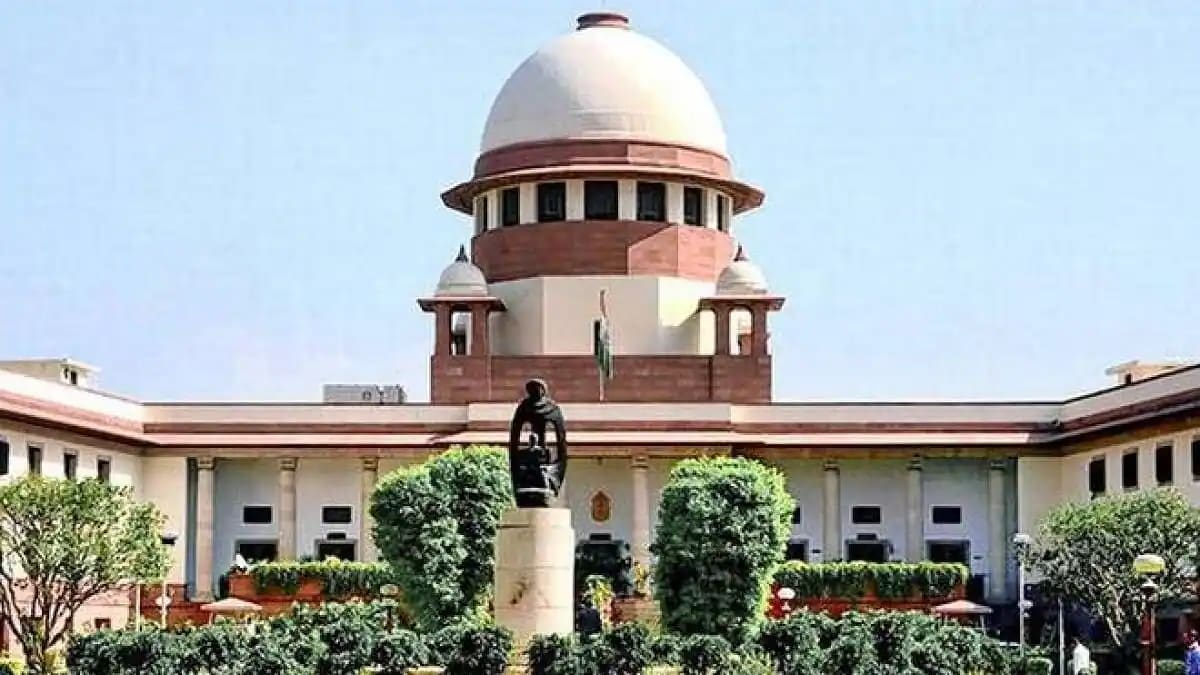
The Central Government on Wednesday clearly said in the Supreme Court that the decision to impose a lifetime ban on convicted leaders comes only under the jurisdiction of Parliament. The government opposed the petition filed with this demand and said that the law already has a provision for a balanced punishment. The Centre said in its affidavit, 'Whether a lifetime ban would be appropriate or not, it is entirely a matter of Parliament.' The government argued that limiting the period of punishment maintains balance and also prevents judicial harshness.
Demand for lifetime ban on tainted MPs and MLAs
This petition was filed by advocate Ashwini Kumar Upadhyay. He demanded from the Supreme Court that a lifetime ban be imposed on MPs and MLAs and criminal cases against them should be settled soon. In response, the Centre said that “judicial review” has its limits and the court cannot challenge Parliament’s decision on the basis of the effectiveness of the law. “The period of ban on crimes is part of Parliament’s policy. It would not be right to impose a lifetime ban by challenging it,” the Centre’s affidavit said.
What arguments did the Centre give?
Articles 102 and 191 of the Constitution give Parliament the power to decide the eligibility and disqualification for contesting elections.
The Representation of the People Act is a law passed by Parliament, and in it, Parliament has already provided for a 6-year ban for criminals.
Other grounds for disqualification are also not permanent – such as bankruptcy, holding an office of profit, etc. So why should there be a lifetime ban based only on conviction?
‘Six years’ or ‘lifetime’ – who will decide?
Currently, as per the Representation of the People Act, 1951, convicted politicians cannot contest elections for 6 years after completion of their sentence. The petitioners are demanding that this period be made lifelong. But the government says that "it is the prerogative of the Parliament to decide whether 6 years is sufficient or a lifelong ban is necessary". The Supreme Court had sought a reply from the government and the Election Commission on this matter. The Election Commission has not yet been able to give its opinion on this.



Discussion (0)
Leave A Reply
Speak Truth To PowerModerated by Times Indian