

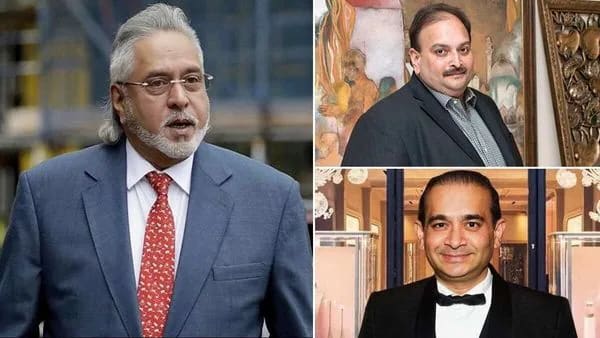
New Delhi: Mumbai attack mastermind Tahawwur Rana has been brought to India from the US. Now the news has come that Punjab National Bank scam accused Mehul Choksi, who was hiding in Belgium, has also been arrested. It is being told that the Narendra Modi government had put pressure for Choksi's arrest. Now Choksi can be brought to India soon, as there is an extradition treaty between India and Belgium. Know what is the extradition law and with how many countries does India have an extradition treaty? Let's also know how Mehul Choksi got trapped.
First Modi signed the treaty, then Choksi got trapped
It was in 2020, when the Union Cabinet headed by Prime Minister Narendra Modi approved the signing of the Extradition Treaty between India and Belgium. This new agreement between India and Belgium replaced the treaty between Britain and Belgium in 1901, which was also implemented on India before gaining independence. At present, that treaty is applicable between India and Belgium. Choksi had acquired citizenship of Antigua and Barbuda. India has no extradition treaty with this country. Agencies became active since Choksi came to Belgium.
What is extradition, let's understand it first
Extradition is a complex legal process that helps deal with cross-border crimes and bring criminals to justice. This process is subject to international law and treaty. Factors like human rights and dual criminality also affect it. This involves the transfer of a person from one jurisdiction to another so that he or she can be tried or sentenced. This process usually occurs when a person is accused or convicted of a crime in one country and he or she flees to another country.
Understand the intricacies of how extradition law works
1. Request: When a country (requesting state) wants to extradite a person, it formally requests another country.
2. Agreement: The country from which the request is being made considers the request based on its extradition treaty or international law.
3. Process: As soon as extradition is agreed to, the legal process begins, which may include legal investigation, arrest warrant and extradition order.
4. Transfer: After all the legal procedures are completed, the person is transferred to the requesting country, where he or she can be prosecuted.
When is India's extradition law applicable
India's extradition law is governed by the Extradition Act of 1962. It is governed by the extradition treaties in force between India and other countries. The Extradition Act, 1962 applies to both individuals extradited to India and from India to foreign countries.
Where does the extradition law apply
Dual criminality: Extradition law usually applies in cases where the crime is illegal in both countries.
Political crimes: Extradition is not allowed for political crimes in some countries.
Human rights: Extradition law is also designed to protect human rights, such as the right to due process and a fair trial.
Reciprocity: Extradition law is usually an agreement between two countries, meaning that both countries agree to extradite to each other.
India has extradition agreements with these countries
India has so far signed extradition treaties with 48 countries and has made extradition arrangements with 12 countries. India has legal agreements with many important countries like the US, UK, Canada, Russia, France, UAE, Nepal, Saudi Arabia, Germany, Bangladesh, so that no fugitive criminal can escape the law.
Which agency handles extradition in India?
The Consular, Passport and Visa Department of the Ministry of External Affairs is the central authority that regulates the Extradition Act. It considers incoming and outgoing extradition requests. The request for extradition on behalf of India is made only by the Ministry of External Affairs, which formally requests for extradition to the concerned foreign country through diplomatic channels.
From which countries can India request extradition?
It is possible for India to request extradition from any country. If we have an extradition treaty with another country, then it is the responsibility of the foreign country to consider our extradition request. If we do not have any extradition arrangement, then the foreign country will consider our request keeping in mind its domestic laws and procedures.
Now whose turn is next among Mallya, Nirav or Lalit
It is believed that liquor businessman and fugitive Vijay Mallya can also be brought to India. Nirav Modi is facing legal action in London regarding the money laundering case. At the same time, former industrialist and founder of Indian Premier League (IPL) Lalit Modi has acquired Vanuatu citizenship. This means that it has become more difficult to bring Lalit Modi back to the country. 15 years ago, in the eyes of Indian investigative agencies, Mallya was a Vanuatu citizen.
Lalit Modi, who has fled abroad, has not only sent an application to the Indian government to renounce Indian citizenship but has also taken citizenship of Vanuatu, a small island country in the Pacific Ocean. Now he can be brought back only if he leaves from there.


Discussion (0)
Leave A Reply
Speak Truth To PowerModerated by Times Indian