

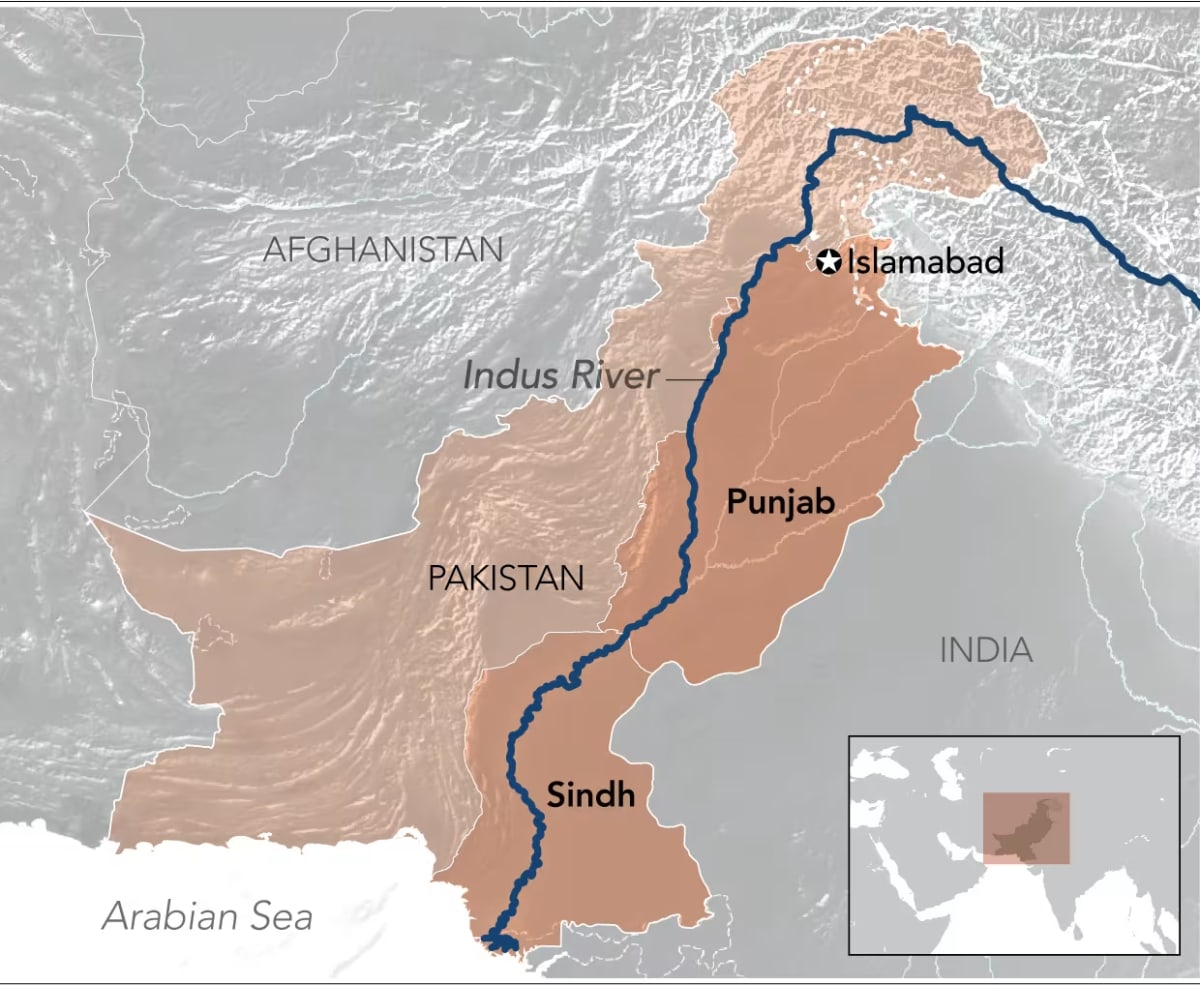
Islamabad: The Pakistan government has launched an ambitious agricultural project aimed at promoting food security in the country. Under this, a network of six canals will be built across the country to irrigate millions of acres of barren land in the country at a cost of $ 3.3 billion. This canal project is being operated as part of the Green Pakistan Initiative (GPI). The project was launched by Pakistan's powerful army chief General Asim Munir and Prime Minister Shahbaz Sharif in 2023. But, now a controversy has arisen over this canal project of Pakistan. It is being alleged that only the state of Punjab has been taken care of in this project.
Last month, General Asim Munir and Punjab province Chief Minister Maryam Nawaz Sharif inaugurated the canal project, Al Jazeera reported. The army and government supporters then called the project a game changer and claimed that it would turn Pakistan's vast desert lands into fertile agricultural land. Munir praised Punjab, the most populous province, for its role as the "powerhouse of Pakistan's agriculture", and said the army would continue its support for the country's economic development.
Why is the canal being criticized
But critics say the mega project, which aims to build canals in four provinces of Pakistan, will lead to water shortages in the southern parts of the country. They say the project was planned without the consent of stakeholders. According to many experts, the GPI will put further pressure on Pakistan's river system, which has seen a decline in water levels due to climate change and overexploitation.
There have been several protests in the southern province of Sindh since the announcement of the project, with the most recent demonstration taking place in major cities including Karachi on March 25, led by the Pakistan People's Party (PPP), the ruling party in Sindh, which is also supporting the Sharif-led government. The big thing is that earlier Pakistan President Asif Ali Zardari and People's Party Chairman Bilawal Bhutto had also criticized it.
Why have people protested in Sindh?
Water allocation has long been a political issue in Pakistan. Sindh is Pakistan's southern province, which is situated on the seashore. In such a situation, Sindh fears that the development of canals in the upper areas will lead to excessive use of water, which could cause disaster for the lower states. Thousands of people, including women and children, have taken to the streets since the government announced its intention to build canals on the Indus River. A protest rally was held in Bhit Shah, Sindh on February 16, expressing apprehension that Sindh's share of water would potentially be reduced. Sindh relies on water from the Indus river system for drinking as well as agricultural purposes.
What is the Green Pakistan Initiative?
Agriculture is the backbone of Pakistan's economy, contributing about 25 percent of its gross domestic product (GDP) and providing 37 percent of its jobs. The GPI was launched in July 2023 to address outdated agricultural practices to improve productivity. It also aims to modernise the agriculture sector by introducing new technologies and equipment, including drones, land management systems and tractors, as well as providing seeds and fertilisers to increase yields.
The project aims to provide technical information to farmers, including soil testing, among other services, and attract both domestic and foreign investment to create what Munir described as "modern farms" at the project's inauguration in Islamabad in 2023. Pakistan imported $9 billion worth of food in 2023, while it faced a balance of payments crisis and was forced to borrow money from the International Monetary Fund (IMF).
Army expanding Green Corporate Initiative
The Green Corporate Initiative (GCI), a private company owned by the army, has been tasked with converting barren land into cultivable farmland. "Reviving agriculture is essential for the economy, especially when Pakistan is facing climate-related threats," retired army general Shahid Nazir, head of GPI, told Al Jazeera. Nazir said 4.8 million acres (1.94 million hectares) of "barren wasteland" had been identified across the country. He said making that land cultivable would also provide employment opportunities to more than 60,000 people.
The military has enormous influence in the country, having ruled Pakistan directly for more than three decades, and runs a number of commercial entities in real estate, agriculture, construction and other sectors. According to GPI, the project will focus on growing "targeted crops" including cotton, wheat, canola, sunflower, rice and pulses. Under the plan, the company will lease land for 30 years through various business models, with at least 1,000 acres (405 hectares) allocated to investors, both foreign and domestic.
Both can be large-scale investors.
What is the Cholistan Canal and why is it important?
In July 2024, President Asif Ali Zardari gave approval for “six strategic canals” after his meeting with GPI officials, who are from Sindh and co-chairs the PPP. According to the meeting details, these canals were deemed “critical for agricultural development and food security”, and Zardari approved their “simultaneous execution”, urging continued funding from both the federal and provincial governments. Of the canals, the Cholistan is the largest and most important project.
According to official documents, the 176 km (109 mi) long canal has three branches, with a total capacity of 4,120 cusecs (116,665 litres/second), and is expected to be completed by the mid-2030s, at an estimated cost of $783 million. To build the canal, authorities have acquired 1.2 million acres (485,623 hectares) of land in Punjab, more than 90 percent of it in the Cholistan Desert, which borders India.




Discussion (0)
Leave A Reply
Speak Truth To PowerModerated by Times Indian