

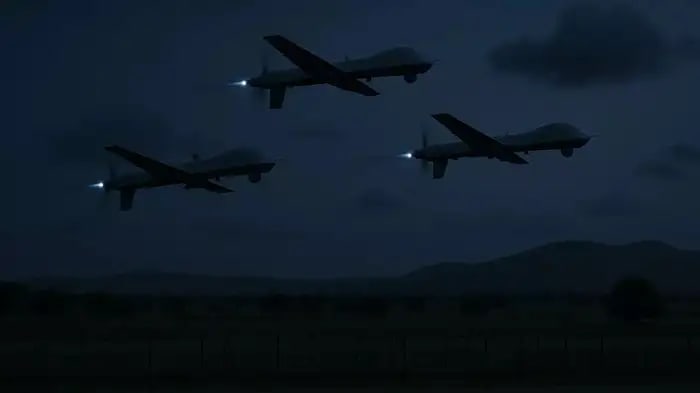
Islamabad: There was a fierce military confrontation between India and Pakistan earlier this month, which ended with a ceasefire on the evening of May 10. This confrontation between two nuclear-armed countries was very different from any previous confrontation. This time traditional systems like Tang, advance fronts were not a part of this action. This time the war was airborne, in which drones, missiles and fighter jets and air defense played their role. India dominated this war using technology, but the thing about Pakistan that caught everyone's attention was the large-scale use of cheap drones.
Pakistan had sent hundreds of drones against India
In Operation Sindoor, India accurately targeted the terrorist bases present in Pakistan and PoK. After this, Pakistan launched a major drone attack against India, which involved hundreds of drones. India also sent drones, but on a smaller scale, as it relied on technological and conventional superiority. However, experts believe that even under conventional air superiority, gray zone warfare equipment may be able to infiltrate.
Grey-zone warfare is an active industry within the international military industry. It is largely middle powers who are investing heavily in it. Turkey, Israel and Iran are the countries leading in these types of systems. Small and medium-sized countries, which cannot afford expensive air forces, are increasingly using drones as their front line equipment. Using a large system against these cheap drones is a difficult task, which shows their danger.
Pakistan gets drones from Turkey
Turkey has gone far ahead in the drone industry, with more than 20 companies investing in these technologies. Baykar is the most successful among them. Pakistan, Bangladesh and 25 other countries are known operators of its various products, including the popular Bayraktar TB-2 armed drone. The drones Pakistan used to attack India were made in Turkey.
ISIS connection to Pakistan drone attack
What Pakistan did against India was similar to what ISIS did against the US. Then the Islamic State made DIY (do it yourself) drones and made them part of its army. The drones developed by ISIS were not based on technical prowess but on ingenuity. Their impact was unmatched. What ISIS started is now shaping the front line of the country's armies almost a decade later. Pakistan is on the same path.



Discussion (0)
Leave A Reply
Speak Truth To PowerModerated by Times Indian