

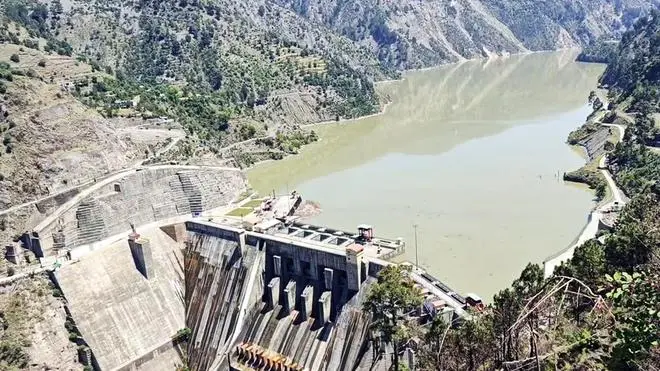
Islamabad: The Government of Pakistan has once again urged India to restore the Indus Waters Treaty (IWT). The President of Pakistan raised this issue on March 22 (Sunday), on the occasion of World Water Day. On the other hand, India has given no indication of relaxing its stance on this matter. India has stated that it will keep the treaty suspended until Pakistan ceases its support for terrorism. India had suspended the Indus Treaty in April of last year, following a terrorist attack in Pahalgam.
Speaking on the occasion of World Water Day, Pakistan's President Asif Ali Zardari said, "Today is a special day. On this day, which highlights the importance of water to the world, India must immediately restore the Indus Waters Treaty (IWT) in accordance with its international obligations. India must understand that a treaty cannot be unilaterally abrogated by a single party."
A Direct Threat to Pakistan's Agriculture
Asif Zardari stated that India has utilized shared water resources as a "weapon." This is a matter of deep concern for Islamabad. The international community, too, cannot turn a blind eye to this, as India's actions undermine a long-standing international agreement. This sets a dangerous precedent under international law regarding the management of trans-boundary resources.
Pointing to Pakistan's dependence on rivers flowing from India, Zardari remarked, "Access to water is a fundamental right enshrined in our Constitution. India's conduct jeopardizes food security. It places at risk the livelihoods of millions of people who depend on these water resources. I appeal to India to fully restore this treaty."
What is the Indus Waters Treaty?
Mediated by the World Bank seven decades ago, this treaty governs the allocation of river waters between India and Pakistan. Under this agreement, Pakistan is granted rights over the western rivers of the Indus Basin—the Indus, Jhelum, and Chenab. India retains control over the utilization of the eastern rivers—the Ravi, Beas, and Sutlej.
Following the terrorist attack in Pahalgam, Kashmir, in April 2025, India announced the suspension of the IWT. Under this treaty, a significant portion of Pakistan receives water for agriculture and other requirements. Consequently, Pakistan is raising this issue across various platforms—ranging from domestic forums to the United Nations General Assembly.
India Takes a Firm Stance
Despite Pakistan's efforts, India shows no signs of softening its stance on this issue. Speaking at a World Water Day event at the United Nations, India's Permanent Representative, P. Harish, made it clear that the Indus Waters Treaty with Pakistan would remain suspended until Islamabad ceases its support for terrorism. Harish stated that India signed the 1960 treaty in good faith, but Pakistan has undermined the agreement through acts of war and terrorist attacks.

Discussion (0)
Leave A Reply
Speak Truth To PowerModerated by Times Indian