

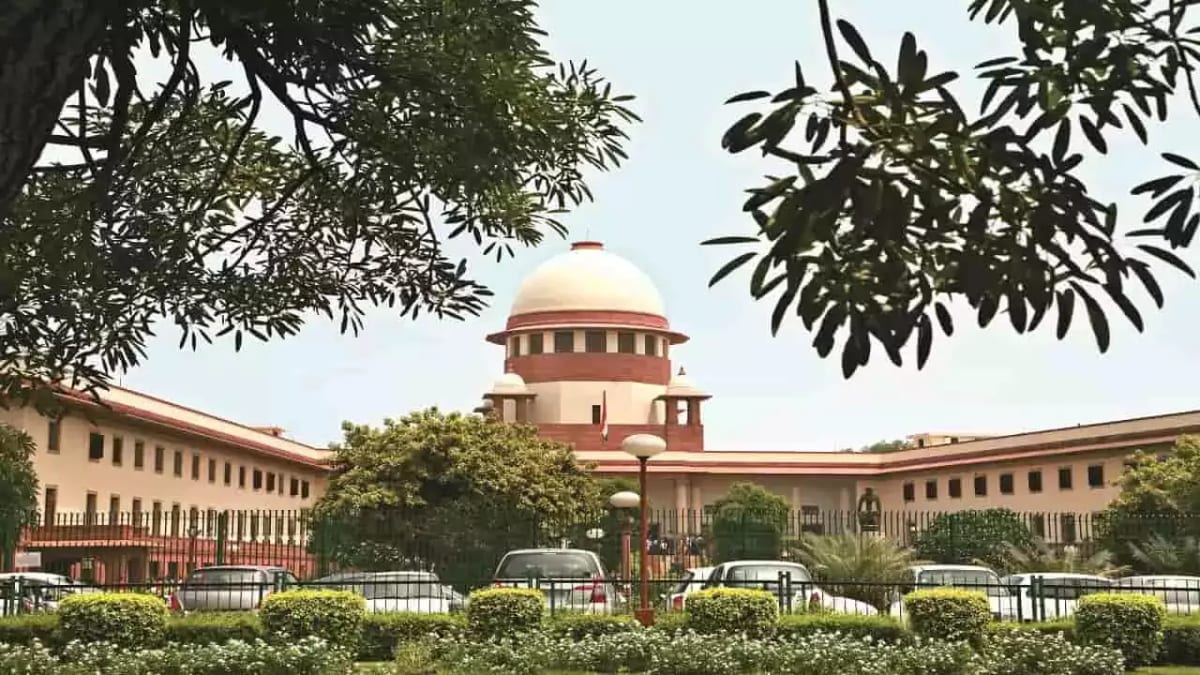
New Delhi: The Supreme Court in a recent decision canceled the arrest and remand of a person. The decision said that under Section 50 of the Code of Criminal Procedure, it is mandatory to provide the grounds of arrest in writing, otherwise the arrest and remand will be considered invalid in the eyes of law.
A bench of Justice MM Sundresh and Justice Rajesh Bindal found that the document given to the arrested person was only an arrest memo, which did not contain any concrete information like the charges against him. It only mentioned the name of the accused, the place of arrest and that he was arrested on the basis of the statement of the co-accused.
No concrete information given
The Supreme Court said in its judgment on March 25 that we agree with the argument of the counsel for the petitioner that the said arrest memo cannot be considered as the basis for arrest, as no other concrete information has been given in it. This is clearly a violation of the mandatory provision of Section 50 of the CrPC, which has been included to give effect to Article 22 (1) of the Indian Constitution. That is, it is necessary to tell the time of arrest at the time of arrest.
Challenge in Punjab-Haryana High Court
In this case, the accused was arrested in connection with an FIR registered last December under sections 384, 420, 468, 471, 509 and 120B of the Indian Penal Code, i.e. cheating, forgery and criminal conspiracy, and was sent to police custody for three days. He challenged his arrest and remand in the Punjab and Haryana High Court, but the court rejected it.
Grounds of arrest not known
Against the High Court's January 30 order, the accused had filed an appeal in the Supreme Court. The appeal challenged the arrest and remand on three grounds and said that Section 41A of the CrPC was not complied with, along with the opportunity to be heard at the time of remand and the grounds of arrest were not informed at the time of arrest.
Sent on remand for three days
The Supreme Court, while hearing the appeal, considered the aspect of not giving information about the grounds of arrest and declared the arrest and remand invalid. The accused was arrested in Chandigarh on December 30, 2024 and sent on remand for three days.





Discussion (0)
Leave A Reply
Speak Truth To PowerModerated by Times Indian