

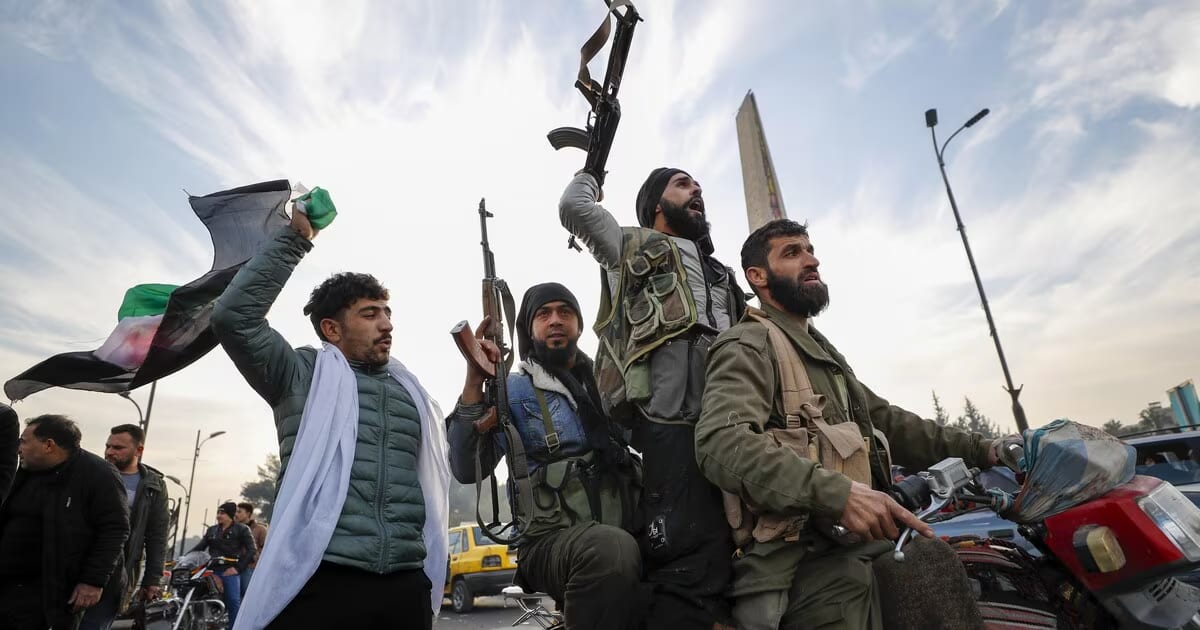
Damascus: Violence has escalated in Syria between the security forces of the current interim President Ahmed al-Shara (Abu Mohammad al-Julani) and the supporters of former President Bashar al-Assad. In the last two days, more than 180 people have died in the ongoing conflict. The Syrian government claims that fighters loyal to Assad carried out a planned attack on the security forces, triggering the violence. On the other hand, security forces have been accused of bombing residential areas, resulting in heavy civilian casualties. The United Nations (UN) has expressed deep concern over the situation, while Saudi Arabia, Turkey, Russia, and Iran have also voiced their worries.
Clashes Between Assad Supporters and Government Intensify
According to a CNN report, the Syrian security forces are finding it extremely difficult to control the Alawite community fighters in the coastal region of western Syria. The Syrian Observatory for Human Rights (SOHR) has confirmed that over 180 people have died in this violence so far. The Alawite community, which has been a long-time supporter of former President Assad, is now facing a direct conflict with the security forces.
The region where the violence is concentrated is known as the stronghold of the Alawite community. Notably, former President Bashar al-Assad himself belongs to the Alawite community. After his removal from power by HTS forces led by Abu Mohammad al-Julani in December last year, Assad fled to Russia and has since been operating from exile.
Both Sides Blame Each Other for the Violence
According to Syrian government officials, the violence erupted on Thursday when pro-Assad militia fighters launched a coordinated attack on security patrols and checkpoints in the Jableh region and nearby rural areas. The government claimed that pro-Assad fighters deliberately targeted the government security forces, forcing them to retaliate with heavy force.
In retaliation, the government's security forces bombed several Alawite villages, resulting in heavy civilian casualties. However, the Alawite Islamic Council (a prominent religious group of Alawite clerics) accused the government of terrorizing civilians and destroying villages. The Council has demanded that the Alawite region be placed under United Nations protection to prevent further bloodshed.
On the other hand, the interim Syrian government has strongly defended its military actions, stating that Assad loyalists were attempting to destabilize the region and overthrow the new government. The situation remains extremely tense as both sides continue to exchange heavy fire.
International Reactions on the Conflict
The United Nations has expressed serious concern about the escalating violence in Syria. The UN Secretary-General has urged both parties to exercise restraint and engage in dialogue to prevent further civilian casualties.
- Saudi Arabia condemned the targeting of security forces by pro-Assad militias and called for peaceful resolution.
- Turkey, a close ally of the new Syrian government, has also expressed worries about the situation in Latakia, where intense fighting is ongoing.
- Russia, where Assad currently resides, has demanded that the Syrian government stop targeting the Alawite population.
- Iran has also urged both parties to find a peaceful resolution to avoid further bloodshed.
Why Is Latakia Becoming the Center of Conflict?
The province of Latakia has now become the center of intense fighting as it has been a historical stronghold of the Alawite community and Bashar al-Assad's family. The Syrian government under Ahmed al-Shara has been trying to regain full control of Latakia, but the pro-Assad militia continues to offer fierce resistance.
The government security forces have launched several airstrikes in the Alawite-dominated areas, resulting in large-scale displacement of civilians. Meanwhile, pro-Assad militia fighters continue to launch guerilla attacks on government security forces, making it difficult for the government to establish control.
What Is the Current Situation?
- Over 180 people have been confirmed dead in just two days of violence.
- Thousands of civilians have been displaced from their homes.
- Residential areas in Latakia and Jableh have turned into war zones.
- Government forces continue to carry out airstrikes, while Assad's loyalists are launching guerrilla-style attacks.
The conflict in Syria is now becoming one of the deadliest clashes since the removal of Assad from power. The international community is deeply concerned about the humanitarian crisis and is urging both sides to ceasefire. However, the conflict continues to escalate with no clear resolution in sight.




Discussion (0)
Leave A Reply
Speak Truth To PowerModerated by Times Indian