

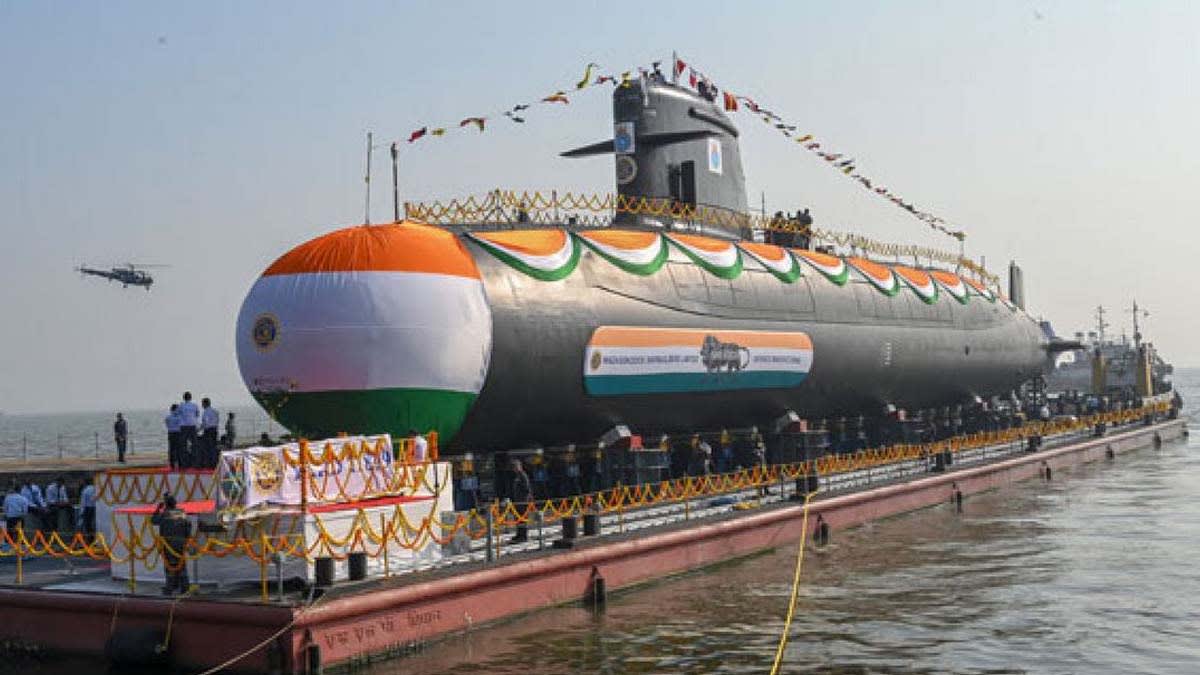
Berlin: Germany's ThyssenKrupp Marine Systems (TKMS) has provided significant information on the Indian Navy's P75(I) submarine deal. TKMS has outlined a seven-year timeline from contract signing to the delivery of the first Project 75(I) submarine. According to TKMS India CEO Khalil Rahman, all six advanced conventional submarines for the Indian Navy are expected to be in service within the next decade. Project 75(I) pertains to the procurement of diesel-electric submarines to be built for the Indian Navy. This deal is expected to significantly enhance the Indian Navy's capabilities.
Delivery of Six Submarines in a Decade
In an exclusive interview with Defence Capital, Rahman said that if the long-pending P75(I) contract is finalized as expected and the technical requirements are settled quickly, the submarines can be delivered within this timeline. He added that the remaining submarines will be delivered sequentially on schedule. These submarines will be based on a proven German design modified to suit the Indian Navy's requirements and will leverage the experience of Mazagon Dock Shipbuilders Limited (MDL) from Project 75 (Scorpene).
What is Project 75(I)?
Project 75(I) is one of India's most expensive defense acquisition programs. The objective is to build six next-generation conventional submarines for the Indian Navy, equipped with advanced Air Independent Propulsion (AIP), modern sensors, and weapons. The project also involves deep technology transfer, which will boost India's Make in India initiative. This is the next phase of Project 75 and involves the construction of submarines in India with technical collaboration from German companies. Similarly, under Project 75, six Scorpène-class submarines are being built with French collaboration, some of which have already been inducted into the Navy.
Delay in the deal could prolong the wait
In the interview, Rahman cautioned that the timeline for such a large program depends on several interconnected factors. These include the timeframe for finalizing the contract, timely definition of technical requirements, the readiness of Indian vendors, and the integration and certification of complex systems such as AIP, combat systems, and weapons. The readiness of infrastructure and workforce at MDL and partner facilities will also be crucial. He said, "These risks are addressed jointly with MDL and the authorities to manage them promptly and transparently."


Discussion (0)
Leave A Reply
Speak Truth To PowerModerated by Times Indian