

Hemant Rajoura: The victory of the Congress-led UDF in Kerala's local body elections was a significant confidence booster. Nevertheless, the specter of factionalism within the party continues to loom large. This is the very challenge that will ultimately determine the Congress party's prospects in the upcoming assembly elections. The party has entered the fray with an ambitious target of winning 100 seats.
Damage Control Triggered by Rahul's Entry
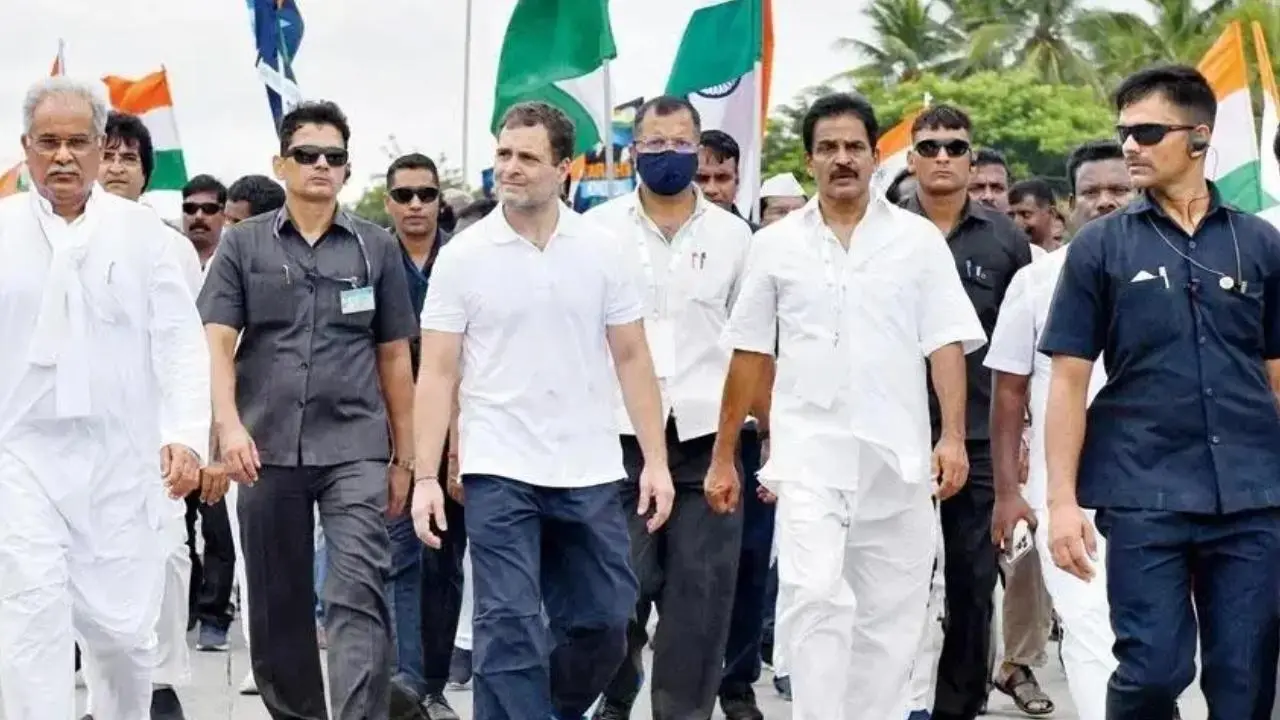
The major event scheduled for March 25 in Kerala—featuring Rahul Gandhi, the Leader of the Opposition in the Lok Sabha—is not merely an election rally; it also serves as a crucial organizational message. His recent displeasure regarding the selection of candidates—manifested through late-night meetings—makes it abundantly clear that deep-seated differences existed within the party. Taking a decisive stand, Rahul Gandhi opted not to grant tickets to sitting MPs who were keen on contesting the assembly elections. This move signaled the party's intent to strictly enforce the "One Man, One Post" principle.
His active engagement can be interpreted in two ways. First, he serves as the Congress party's biggest star campaigner for these elections. Second, he has assumed the role of the ultimate arbiter in the effort to rein in factionalism. The pertinent question remains: Will his presence merely succeed in suppressing dissent temporarily, or will it be able to eradicate it permanently? Questions are also being raised regarding the relatively low number of tickets allotted to women—a matter of particular concern given the party's stated commitment at the national level to enhance women's representation.
Buoyed by Victory in Local Body Elections
The UDF's performance in the recent local body elections has infused a renewed sense of energy within the Congress party. However, the dynamics of local body elections and assembly elections in Kerala's political landscape have historically differed. In 2021, too, the Congress party harbored high hopes, but it was the LDF that scripted history by returning to power with a tally of 99 seats. In this context, it might be premature to interpret the results of the local body elections as a definitive sign of victory in the Assembly polls. As always, the electoral contest in the state remains primarily between the LDF and the UDF. The LDF comprises the CPM, the CPI, and the Kerala Congress (M).
Hoping for a Comeback on the Strength of Rahul's Popularity
The administrative experience and welfare schemes of the Pinarayi Vijayan government work in its favor. On the other hand, the UDF is pinning its hopes on a comeback, banking on anti-incumbency sentiments, its victories in the local body polls, and the popularity of Rahul Gandhi. However, this contest is not merely about policies; it is also a test of organizational strength—an arena where the LDF appears to be relatively more disciplined.
The major challenge confronting the Congress party is internal factionalism. Resentment among several senior leaders surfaced even during the ticket distribution process, though this situation has been managed for the time being. Nevertheless, such dissent could resurface during the actual election campaign. Rahul's role in this regard will be decisive.
LDF Benefits from the BJP's Rise
While the BJP has yet to open its account in the Kerala Legislative Assembly, recent developments suggest that the party can no longer be ignored. Its victory in the Thrissur Lok Sabha seat and its capture of the Thiruvananthapuram Municipal Corporation signal that the party is steadily expanding its foothold in urban areas. The BJP's growing vote share poses a challenge to the Congress, as it threatens to erode the UDF's traditional vote bank. If the BJP succeeds in cutting into the decisive votes in a few key constituencies, the LDF stands to benefit from the outcome.

Discussion (0)
Leave A Reply
Speak Truth To PowerModerated by Times Indian