

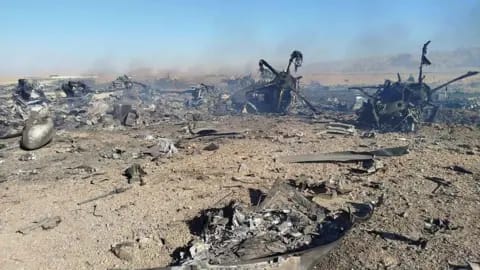
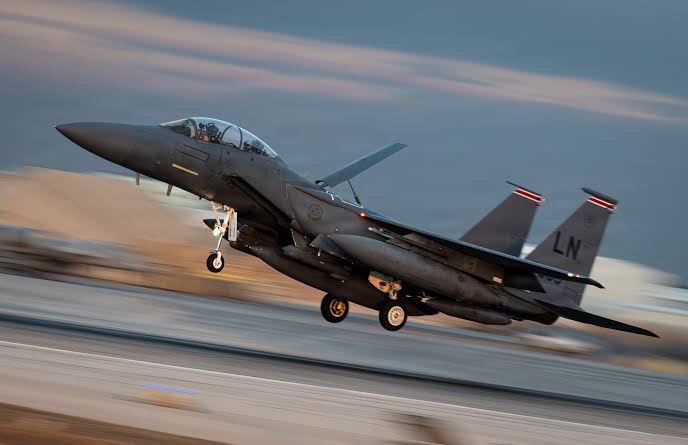
Washington: The United States has successfully rescued the pilot of one of its fighter jets that was shot down in Iran. This is being hailed as a major success for U.S. forces, as the pilot had become stranded in a remote area of Iran. However, during the course of this entire mission, the U.S. military took an action that, at first glance, appears startling. Specifically, the U.S. unit tasked with executing the pilot rescue mission deliberately set fire to—and destroyed—one of its own aircraft while inside Iran.
During the pilot rescue operation deep within Iranian territory, U.S. forces destroyed one of their own valuable military aircraft. The value of this aircraft is estimated to be approximately ₹9,277,340,000. This drastic measure was taken because the aircraft involved in the operation had become stranded in Iran due to a technical malfunction. It was impossible to fly the aircraft out, and there was a significant risk that it would fall into the hands of the enemy military.
The U.S. Destroys Its Own Aircraft
Following the crash of the fighter jet in Iran, U.S. forces launched a rescue operation and successfully located their airman. He was then transported to MC-130J Commando II aircraft waiting at makeshift airstrips established within Iran. It was at this juncture that a new complication arose for the U.S., as one—or possibly two—of these aircraft suffered malfunctions and were rendered unfit to fly.
The mechanical failure in the U.S. aircraft occurred because they became stuck in the soft, sandy terrain of the desert. Furthermore, the unit possessed neither the means to recover the stranded aircraft nor the necessary resources to repair them on-site. Compounding the situation was the looming threat of the Iranian military closing in on their position. Faced with these circumstances, U.S. commanders were compelled to make the difficult decision to destroy the aircraft within a very short timeframe. US Jet in Iran
Setting Fire to a Valuable Jet with Their Own Hands
The U.S. unit had to extract its pilot safely before the Iranian military arrived. Consequently, rather than simply abandoning the aircraft, they decided to set it on fire. Due to the risk of the aircraft's sensitive military technology falling into Iranian hands, the U.S. military destroyed its aircraft (the exact number remains unclear) that had become stranded on Iranian soil.
The jet destroyed by U.S. forces in Iran—and indeed every such aircraft—is estimated to be worth over $100 million (9,277,340,000 Indian Rupees). These aircraft are equipped with modern communication, navigation, and special operations systems. This means that if such an aircraft were to fall into the hands of an adversary, they could gain significant insight into U.S. technology.
The U.S. unit had to extract its pilot within a very short timeframe. The situation could have taken a drastic turn had the Iranian military contingent arrived. To prevent the aircraft's military technology from falling into Iranian hands, it had to be burned. This decision exemplifies the protocols adopted during high-risk operations.
Defense Experts
Military Technology: The Paramount Priority
Military experts state that this decision reflects the standard protocols followed during high-risk operations. It is an integral part of the force's training that preventing confidential equipment from falling into enemy hands takes precedence over worrying about the financial loss incurred by the destruction of the aircraft.
According to a report by The New York Times, the U.S. airman who landed in Iran following the attack on his aircraft saved his life by hiding in the mountains, evading Iranian search teams, and climbing to a mountain peak situated at an altitude of 7,000 feet. As part of this operation, the U.S. agency—the CIA—also conducted missions to mislead Iranian officials regarding the airman's whereabouts.



Discussion (0)
Leave A Reply
Speak Truth To PowerModerated by Times Indian