

Washington, D.C.: The U.S. job market witnessed a sharp rise in layoffs last month, marking the highest February job cuts since 2009. According to a report by Challenger, Gray & Christmas, U.S.-based employers announced 172,017 job cuts—a staggering 103% increase from the previous year. This spike in layoffs, primarily driven by federal job reductions, signals rising economic uncertainty and concerns over recession-like conditions.
Massive Federal Job Cuts Fuel Spike in Layoffs
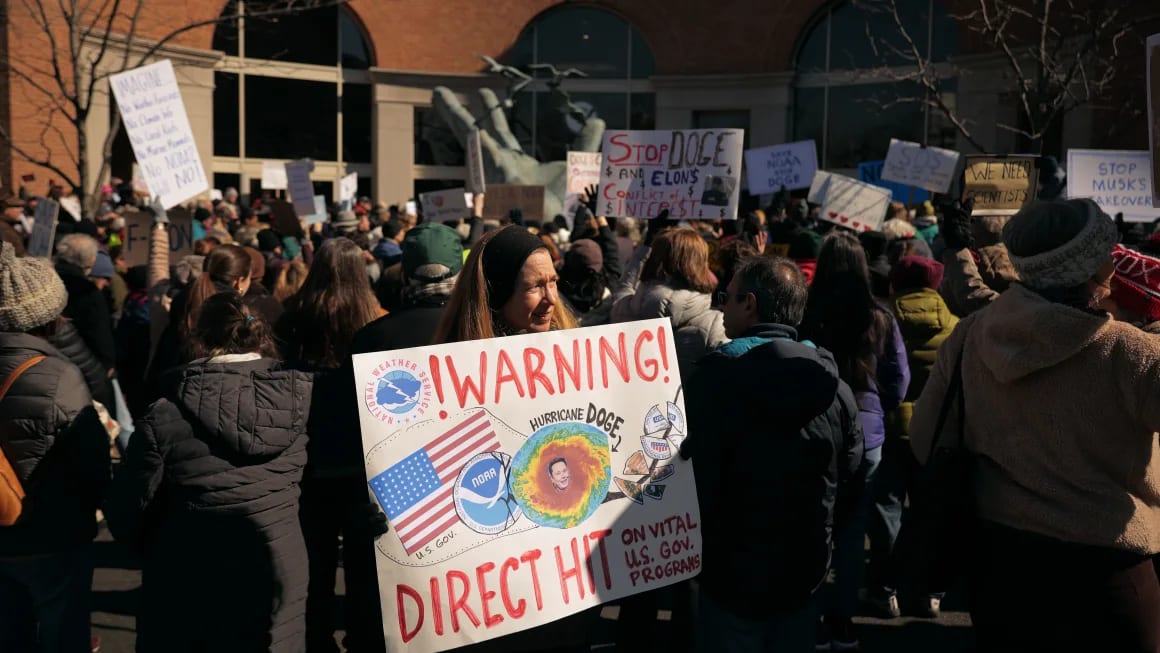
The most significant cuts were seen in the government sector, where the newly established Department of Government Efficiency (DOGE) led layoffs across 17 federal agencies. A total of 62,242 federal jobs were slashed—a massive 41,311% increase compared to the 151 cuts recorded in February 2024. These reductions also impacted private organizations dependent on government funding, leading to an additional 894 layoffs.
Aside from government job cuts, major layoffs were observed in the following sectors:
- Retail: 38,956 job cuts
- Technology: 14,554 job cuts
- Consumer Products: 10,625 job cuts
The primary reasons behind the layoffs include federal spending cuts (63,583 jobs), corporate bankruptcies (35,172 jobs), economic conditions (28,098 jobs), and business restructuring (16,828 jobs).
Concerns Over U.S. Labor Market Stability
Economic experts are raising alarms over the impact of these job cuts. Gregory Daco, Chief Economist at EY Parthenon, called the government layoffs a "major concern", warning that they could alter employer hiring strategies. Similarly, Andrew Challenger, Senior Vice President at Challenger, Gray & Christmas, pointed out that "job cuts soared in February due to government budget slashes, canceled contracts, and fears of trade wars."
However, despite the surge in layoffs, companies announced 34,580 new hiring plans in February—the highest for the month since 2022.
Federal Layoffs Yet to Reflect in Jobs Report
The impact of federal job cuts on official employment figures remains uncertain. The February U.S. Jobs Report, expected to be released by the Bureau of Labor Statistics (BLS) on March 8, is projected to show a net job gain of 160,000 and an unemployment rate holding steady at 4%. However, many of the federal layoffs occurred after the survey period and may not appear in this report.
Additionally, private-sector hiring has slowed. Payroll giant ADP reported that U.S. businesses added only 77,000 jobs in February—a sharp decline from 186,000 in January. Service industries tied to consumer activity experienced the largest job losses, signaling potential economic headwinds.
Economic Uncertainty Dampens Business Confidence
The sharp rise in job cuts comes amid rising concerns over economic instability. Experts warn that federal budget cuts, tariffs, and mass layoffs are pushing businesses into a "batten-down-the-hatches" mentality, making them hesitant to expand or invest in hiring.
Martha Gimbel, an economist at Yale University, explained: "At a time when there is uncertainty about government spending and trade policies, businesses are reluctant to invest in their workforce."
Despite these concerns, analysts believe that consumer resilience and steady private-sector hiring could prevent a major downturn. However, the coming months will be crucial in determining whether the U.S. job market can withstand these economic shifts or if further layoffs will follow.







Discussion (0)
Leave A Reply
Speak Truth To PowerModerated by Times Indian