

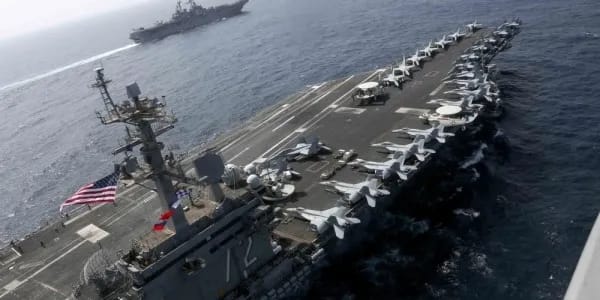
Tehran: The turbulent land of the Middle East is once again echoing with the roar of weapons. The military deployment that America has started against Iran is not just a normal defense strategy, but it is a warning. The way America has surrounded Iran clearly shows that Iran can no longer take America lightly. From B-2 stealth bombers to full capability aircraft carriers and from Cyprus to Israel... the kind of military coordination that America has prepared, it clearly tells that America is no longer in the mood to just threaten. The way America has sent a huge destructive force to this region before the talks with Iran, it raises the apprehension that what will happen if these talks fail?
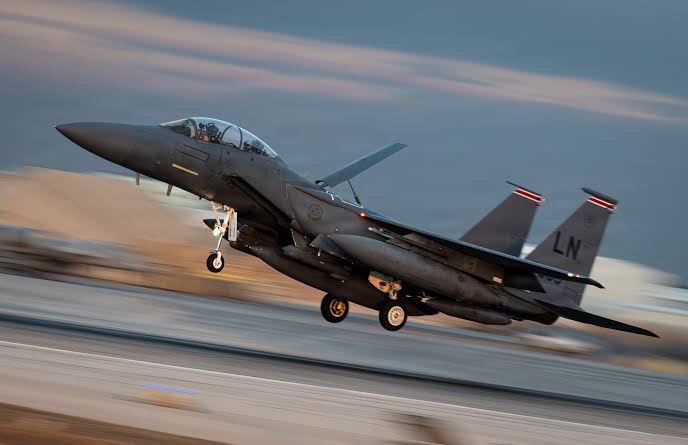
America has deployed 6 units of B-2 stealth bombers in Diego Garcia Island in the Indian Ocean. Apart from this, the American THAAD air defense system has been deployed to protect Israel and after doing all this, now America has also sent its second aircraft carrier towards the Middle East. According to the report of ynetnews, the American aircraft carrier USS Carl Vinson has reached near the Middle East. It has 90 fighter jets and more than 6000 crew members. Apart from this, another aircraft carrier USS Harry S. Truman is already deployed in the Middle East.
Iran and America meeting in Oman today
A meeting is going to be held in Oman today between US and Iranian officials regarding the nuclear deal. At the same time, Iran's state TV channel announced on Friday morning that no pictures of Saturday's meeting in Oman between Iranian Deputy Foreign Minister Abbas Araghchi and US special envoy Steve Witkoff would be released. This indicates that this meeting could actually take place for face-to-face talks. Which Iran had earlier denied. Iranian Foreign Ministry spokesman Ismail Baghai said that "We are giving diplomacy a real chance." He said that "despite the tension, America should appreciate this decision. We are not taking any decision in advance, we intend to assess the intentions of the other side on Saturday." At the same time, Ali Shamkhani, a senior advisor to Iran's Supreme Leader Ali Khamenei, stressed on X that the talks are not direct. He said that "the foreign minister has full authority for indirect talks with the United States. We are looking for a real and fair agreement. Practical proposals are on the table."
Will tensions between Iran and America reduce?
A diplomatic source has told Saudi Arabian media outlet Al-Hadath that amid the ongoing US campaign against Houthi rebels, who have Iran's support, "Iran is ready to discuss the issue of its militia in the region." According to the source, "Iran believes that its militias have failed to meet their objectives and now it wants to at least protect its missile program." On the other hand, Donald Trump, ahead of today's meeting, warned that military action remains a possibility if there is no progress on the nuclear issue, the US is significantly strengthening its strike capabilities in the region.
New satellite images show the USS Carl Vinson entering the Indian Ocean through the Strait of Malacca. This is the USS Harry S. It is going to join Truman, which is already deployed in the Middle East. Both aircraft carriers have a fleet of 90-90 fighter jets and helicopters, carrying about 6,000 personnel. According to US military sources, the US is in constant coordination with Israel and Greece. The US has deployed the Theater High Altitude Area Defense (THAAD) system, which can thwart a ballistic missile attack.
American aircraft have arrived in full force
The Carl Vinson strike group includes F-35C stealth fighter jets, two squadrons of F/A-18, EA-18G electronic warfare aircraft, E-2 Hawkeye airborne command and control planes and MH-60R/S helicopters. Apart from this, the group also includes missile cruiser Princeton and destroyer Sterett. A US official told Al Arabiya that F-35s have already been spotted in the region and Carl Vinson is expected to begin operations in the coming days, likely off the Iranian coast. The Harry S. Truman strike group also includes F/A-18s, EA-6 electronic warfare aircraft, E-2 command planes, S-3 anti-submarine aircraft and Black Hawk helicopters. These strategic bombers, which are designed to fly stealthily, can carry both nuclear weapons and a massive 12-ton "bunker buster."

Discussion (0)
Leave A Reply
Speak Truth To PowerModerated by Times Indian