

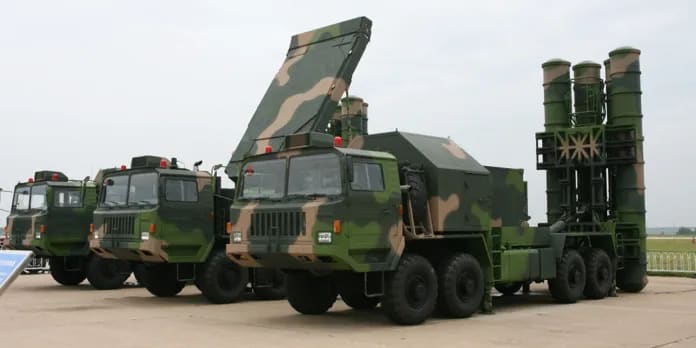
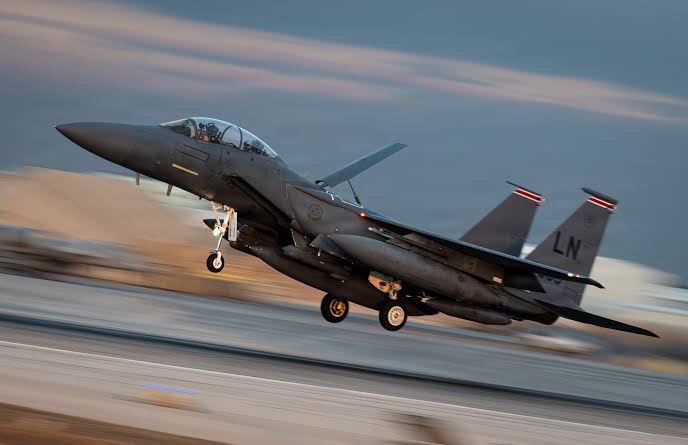
Islamabad: India's Operation Sindoor has caused dangerous destruction in Pakistan. Indian missiles and drone attacks have turned Chinese weapons into junkyards in Pakistan. Indian attacks have exposed the weaknesses of Pakistan's air defense and infrastructure. Pakistan's army is more than 80 percent dependent on Chinese weapons. Its air defense systems, missiles and drones are also Chinese, which have been completely destroyed in the war against India. In this war, India has selectively destroyed Chinese air defense systems and missile systems and has shown that trusting Chinese weapons is the biggest stupidity.
Operation Sindoor has shown that Chinese air defence systems have proved useless against Indian missiles. China, which compared its air defence systems HQ-9B and HQ-16 to the US Patriot missile defence, has failed miserably in stopping Indian SCALP stealth cruise missiles and Hammer glide bombs. Chinese air defence systems have also failed to detect missiles coming from much lower ranges and altitudes. Apart from this, Chinese air defences were constantly struggling to integrate with the rest of the weapons, which the Indian SEAD (Suppression of Enemy Air Defence) strategy took advantage of by targeting radar nodes and crippling the entire network.
Why did Chinese weapons fail against India?
According to experts, Pakistan's fighter aircraft depend on pre-programmed flight trajectories, while Indian aircraft are far above them in terms of technology, so Pakistan's Chinese weapons failed miserably in catching the trajectory path of Indian weapons. Pakistan buys 81 percent of its total weapons from China. But China still does not give its advanced technology to Pakistan, due to which most of Pakistan's systems have become very old. Whereas India, apart from Russia, also uses American and Israeli weapons, which are very advanced. For example, the Barak-8 missile, which India has built in collaboration with Israel, shot down the Pakistani Fateh-1 missile in the air.
Many defense experts have been saying for many years that China has itself downgraded the weapon systems it has sold to Pakistan. For example, the HQ-9P has a range of 125 km, while China's domestic HQ-9B has a range of 250-300 km. A Pakistani LY-80 radar system in Gujranwala was destroyed by an Indian Harop loitering munition due to poor mobility and counter-drone capabilities. Apart from this, the aperture of the KLJ-7A AESA radar of the JF-17 fighter jet is smaller than the RBE2-AA radar of India's Rafale, which reduces the detection range and tracking accuracy. Apart from this, its fuel storage capacity is also very low, due to which it is forced to refuel there again and again. Apart from this, the range of the PL-15 air to air missiles given by China to Pakistan is also around 145 kilometers, while the range of the Chinese PL-15 is 200 to 300 kilometers.





Discussion (0)
Leave A Reply
Speak Truth To PowerModerated by Times Indian