

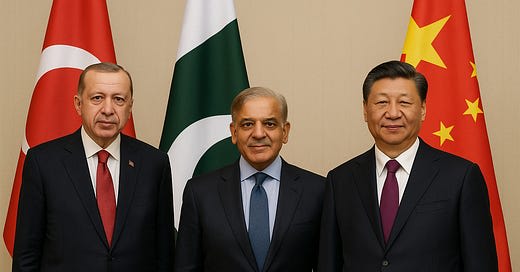
Ankara/Islamabad: Even before the Pahalgam terrorist attack, China, Turkey and Pakistan were trying to surround India together. But after the Pahalgam terrorist attack, when India started Operation Sindoor, this dangerous triangular group is trying to hurt India not only militarily but also economically. This axis of three enemies of Delhi has planned to surround India at economic, military and diplomatic levels. Their aim is not only to stop India's regional influence but also to disrupt India's geo-political position. Expressing concern, the report published in the Sunday Guardian said that the strong Chinese diplomatic and military support received by Pakistan during Operation Sindoor and Ankara's imprint on Islamabad's weapons depot is a matter of concern for India. The 'Made in China' mark on Pakistani weapons used against India shows that the geo-political situation of Asia is undergoing a significant change.
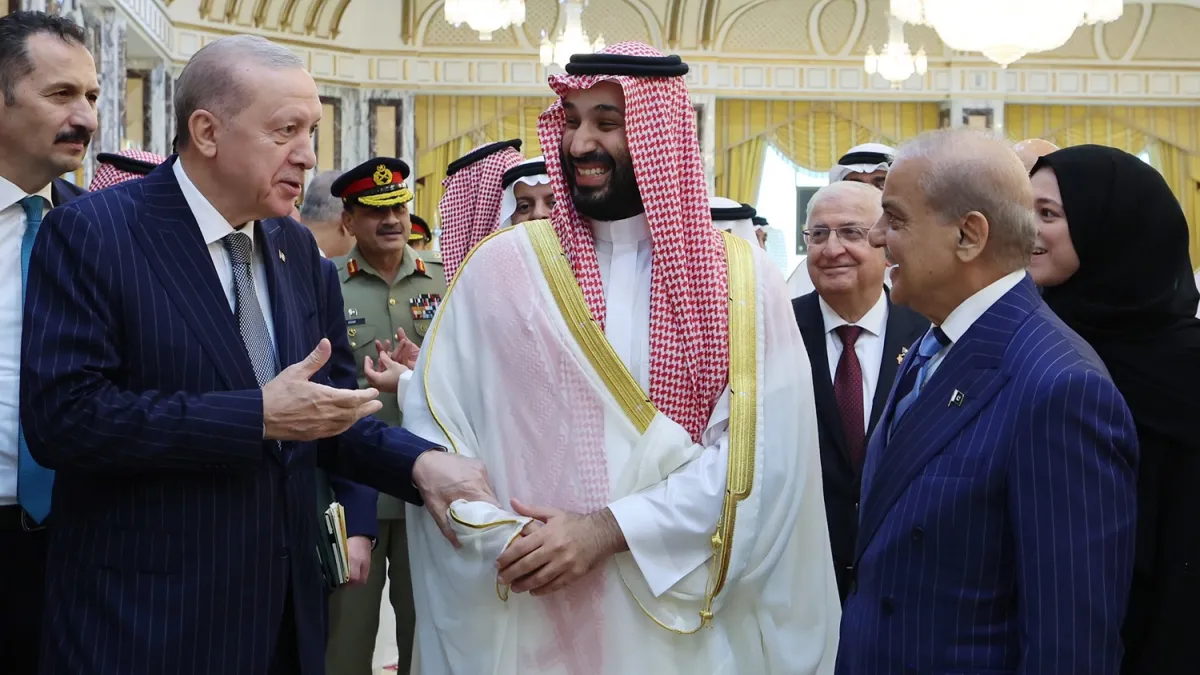
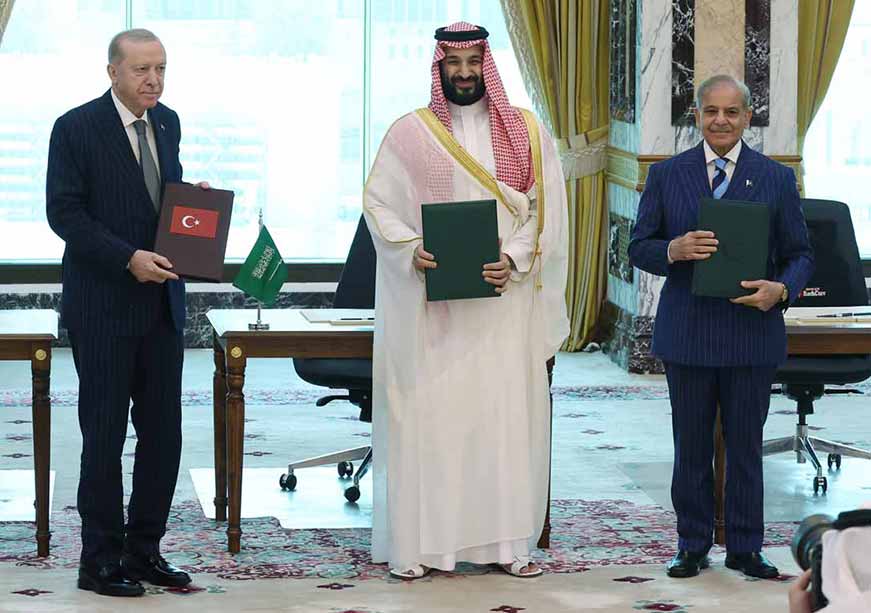
China has already given huge loans to Pakistan through the CPEC project. While the alliance with China also opens the way for infrastructure development, energy projects and defense cooperation for Turkey. Along with the China-led Asian Infrastructure Investment Bank, many Chinese banks have recently given huge loans to Turkey in the name of development. Which has helped Turkey to manage its financial situation. In the last few years, China and Turkey have expanded their relations and increased them to strategic partnership. After Operation Sindoor, Shahbaz Sharif is on a visit to Turkey and Pakistan's Army Chief Asim Munir is also with him. They have gone to thank Erdogan for helping them against India.
China, Turkey Pakistan's 'Asia Plan'
Friendship with China is the biggest factor in Turkish President Recep Tayyip Erdogan's 'Asia Anew Initiative'. Through China, he wants to reach BRICS Plus and the Shanghai Cooperation Organization (SCO), in which Beijing is now trying to gain influence. Although Turkey is a member of NATO and wants to join the European Union, its tense relations with the West are creating a lot of difficulties. Due to which Turkey has now stopped speaking on the atrocities against Uighur Muslims. Apart from this, the friendship between Turkey and Pakistan is not hidden from anyone. Earlier this year, the armies of Pakistan and Turkey conducted a joint exercise at Pakistan's Special Operations School in Cherat, which included two combat teams of Pakistan's Special Services Group and 36 personnel of Turkish special forces.
Apart from this, Pakistan is buying Turkish drones, which it used against India in recent times. During the conflict with India, Turkey had sent one of its warships to Pakistan, while at least 3 Turkish aircrafts landed in Pakistan carrying weapons. Immediately after the ceasefire with India, Pakistan's Foreign Minister Ishaq Dar reached Beijing to thank, while Pakistan's Prime Minister Shahbaz Sharif is now in Ankara to thank Turkey. Where he has met Turkish President Erdogan. This group of China, Turkey and Pakistan wants to stop India's influence at all costs. The reason is clear, China has taken its economy very far, Pakistan is not interested in development and Turkey is living in the dream of recreating the Ottoman Empire. Therefore, India is at the top of the hit list of all three.
How dangerous is the alliance of China, Turkey and Pakistan?
There is a 60 billion dollar CPEC project between China and Pakistan. Trade between Turkey and China is around 30 billion dollars, in which weapons, drone technology and dual use technology have a major share. Through the free trade agreement and defense agreements between Turkey and Pakistan, both countries are uniting against India. China is providing war training to Pakistan through JF-17 Block III, VT-4 tanks, HQ-9B missile systems and Northern War Theater Command, which is a threat to India. Turkey has started supplying state-of-the-art T129 ATAK helicopters, smart bombs and UAVs to Pakistan. Also, Pakistani pilots are also trained in Turkey. Turkey and Pakistan are constantly getting the support of China in their efforts to internationalize the Kashmir issue on global forums. Propaganda is run fiercely against India in the United Nations, Organization of Islamic Countries OIC and social media campaigns. Turkey-Pak media network and China-backed bots are spreading misconceptions against India in the Muslim world and creating the image of a 'Hindu nation'.
How should India counter the alliance of enemies?
India will have to build a new strategic relationship with European countries to build pressure against Turkey for supporting terrorists. India will have to establish strategic relations with key countries like Iran, UAE and Saudi Arabia in West Asia to balance Turkey's influence and secure important energy routes.India should deepen its strategic ties with other players in the world, or perhaps even Iraq. India should openly develop ties with Turkey's enemies Greece and Cyprus and should also establish contacts with the Kurds who are waging a war against Turkey in Syria. Geo-politics, where your enemies are willing to go to any lengths, you cannot be a 'good boy' with them. The Kurds want weapons and they should be provided with weapons. Turkey should realize that Kurdish weapons can hurt them deeply. India should not be a part of Turkey's SCO or BRICS Plus under any circumstances. This is in India's hands. Turkey cannot join these two organizations without India's approval.
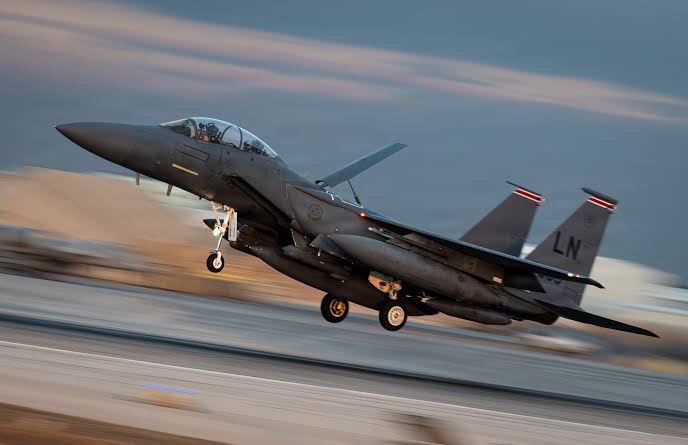
To counter China, India will now have to take its military capabilities to the next level at all costs. India needs advanced fighter jets, there is a need to rapidly increase the capability of electronic warfare. Apart from these, India should move forward strongly to get concrete results from its Act East policy. New Delhi should deepen ties with ASEAN partners, informing them of the geopolitics that affect India's national security interests. Investing in expanding trade partnerships with ASEAN countries could provide economic leverage against this China-led alliance, especially since some ASEAN countries have their own problems with China and would welcome options to diversify ties and not put all their eggs in the China basket.

Discussion (0)
Leave A Reply
Speak Truth To PowerModerated by Times Indian