

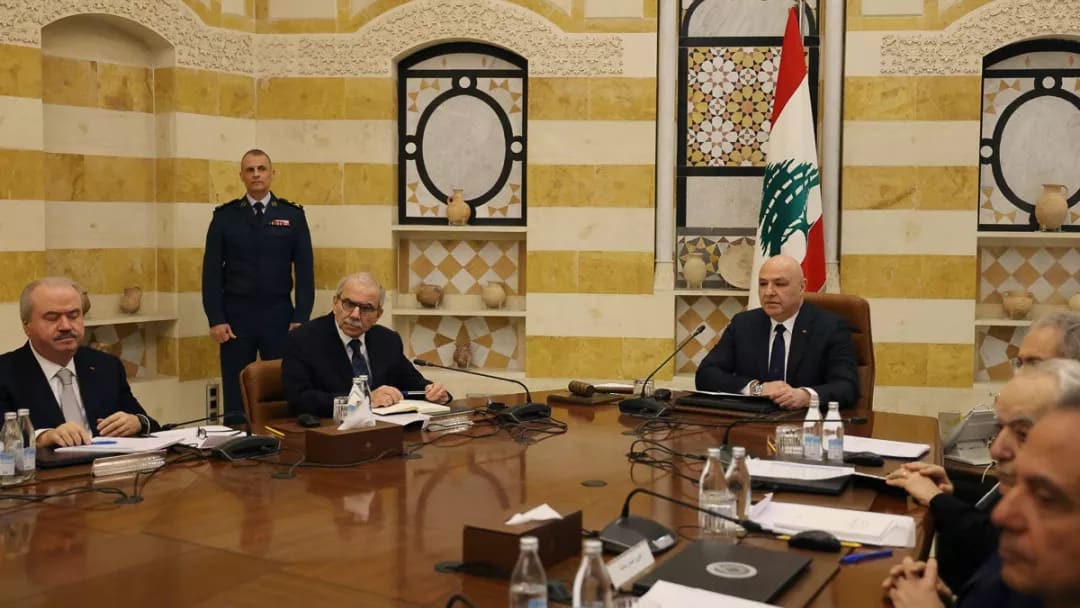
Beirut: More than 250 people have lost their lives in Lebanon following Israeli attacks targeting Hezbollah. Israel has asserted that the ceasefire agreement with Iran does not apply to Lebanon. Conversely, Iran has threatened to suspend peace talks being held in Pakistan unless Lebanon is included in the negotiations. Lebanese journalist Khalid Zein Eddin has penned an article regarding Lebanon, in which he details how Hezbollah—with the assistance of Iran—is systematically eroding Lebanon's national identity. He writes, "We are fully aware that Israel will not cease this war against us until it has achieved all its objectives deep within Lebanese territory."
He further notes that Israel's primary objective is to disarm Hezbollah. In his article, the Lebanese journalist explains: "Hezbollah was created by Iran, which has also provided it with financial backing. By exacerbating tensions between Hezbollah's supporters and other factions within Lebanon, Israel seeks to engineer a scenario in which Hezbollah alone is held accountable for the country's destruction."
Lebanon-Israel-Hezbollah Timeline
Hezbollah controls a significant portion of Lebanon through the force of arms.
What did the Lebanese journalist reveal about Hezbollah?
To what extent does Hezbollah comply with the decisions of the Lebanese government, surrender its weaponry, and reintegrate itself into the national mainstream? However, if Hezbollah persists in its defiance of Lebanon's sovereignty and its people, the very future of Lebanon's identity will be jeopardized.
Experts on this conflict suggest that it may well be the final war in West Asia—a conflict that will fundamentally and completely alter the face of the entire region.
In this calculated new landscape, there will be no room for hostility toward Israel, and the scope for peace with Tel Aviv will expand.
Israel, too, will seek to establish its dominance over the region—a dominance that will, to some extent, resemble *Pax Judaica*, or "Jewish Peace."
He further writes that, when viewed objectively, Iran is at a disadvantage. The reason for this lies in the vast disparity of power between the Washington-Tel Aviv axis and Tehran. It is true that Iran has inflicted damage upon the Arab states of the Gulf and has effectively held the Strait of Hormuz hostage; however, this strategy cannot be sustained indefinitely.
The world is changing. There is a strong possibility that the new global order which eventually emerges will be anchored by a triumvirate comprising the United States, China, and Russia—an order in which West Asia operates under American directives, particularly with regard to Israel. As for Palestine, it is plausible that it will ultimately be absorbed into a "Greater Israel," which would subsequently forge alliances with other global centers of power.
'This War Could Destroy Lebanon'
A Lebanese journalist has written:
It is based on these very considerations that Israel has decided to transform Lebanon into yet another front in its war against Iran. Given Hezbollah's presence, this decision came as no surprise. However, I wish to emphasize that this conflict has the potential to utterly devastate Lebanon. Should Israel launch a large-scale ground offensive here, it could lead to a scenario involving the potential, long-term occupation of Lebanese territory extending as far as the Litani River—at a time when Lebanon has already been severely weakened by rampant inflation and corruption. Corruption is rampant within ministries, government departments, and courts. The power-sharing arrangements that brought an end to the 15-year-long Lebanese Civil War—specifically the 1989 Taif Agreement—have exacerbated all these conditions. These arrangements have deepened sectarian divisions, thereby hollowing out the state and its institutions. This implies that Hezbollah has transformed into a political party while simultaneously remaining a militia.
— Khaled Zein Eddin, Lebanese Journalist
According to Khaled Zein Eddin, Hezbollah continues to serve Iran to this day, and it is precisely because of Hezbollah that Israel has launched attacks on Lebanon. To put it bluntly, Lebanon is paying the price for Hezbollah's alliance with Iran. Israel will not desist from its efforts to assert control over Lebanese territories in order to disarm Hezbollah, prevent its capabilities from being reconstituted, and stop it from posing a threat to Israel's security. This also entails severing the supply lines between Hezbollah and Iran. Note, for instance, how Israel has facilitated regime change in Syria—a country that served as a lifeline for Iran in terms of funding, weaponry, and mobilization.
'As Long as Hezbollah Exists, Lebanon's Future Is in Jeopardy'
Khaled Zein Eddin has stated unequivocally that as long as Hezbollah continues to exist, Lebanon's future remains at risk. Hezbollah cannot simultaneously hold seats in the national parliament and operate as a militia commanding armed fighters. The far better option for the group is to lay down its arms. It should function strictly as a political party. It must cease engaging in money laundering and disseminating Iranian propaganda, and it should stop mobilizing crowds on the streets. Lebanon has no future until Hezbollah completely lays down its arms, transforms into a political party, and becomes truly Lebanese.

Discussion (0)
Leave A Reply
Speak Truth To PowerModerated by Times Indian